
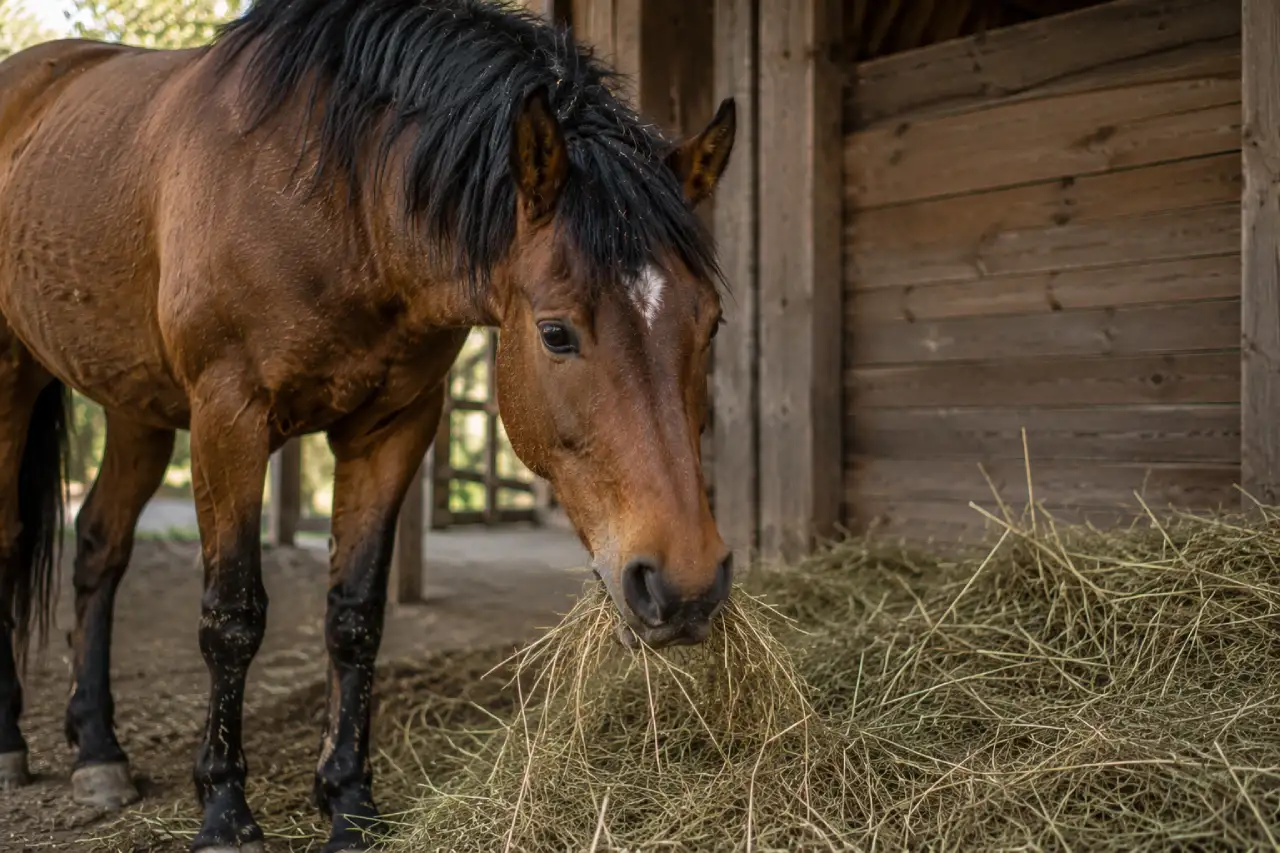
Hay Change in Horses: What Should You Watch Out For?
8 tips for changing hay and how your horse’s digestion reacts to it
As a horse owner, you may know the situation: you feed your horse a different hay – and suddenly its digestion changes. Some horses react only slightly sensitively, while others develop fecal water, soft manure, or even recurring digestive problems. This happens particularly often in autumn, when horses switch from pasture to hay, or in spring, when the entire feeding routine changes.
Because: changing hay is a major adjustment for the horse’s entire digestive tract. That is why this phase is one of the most common triggers of fecal water and unstable digestion.
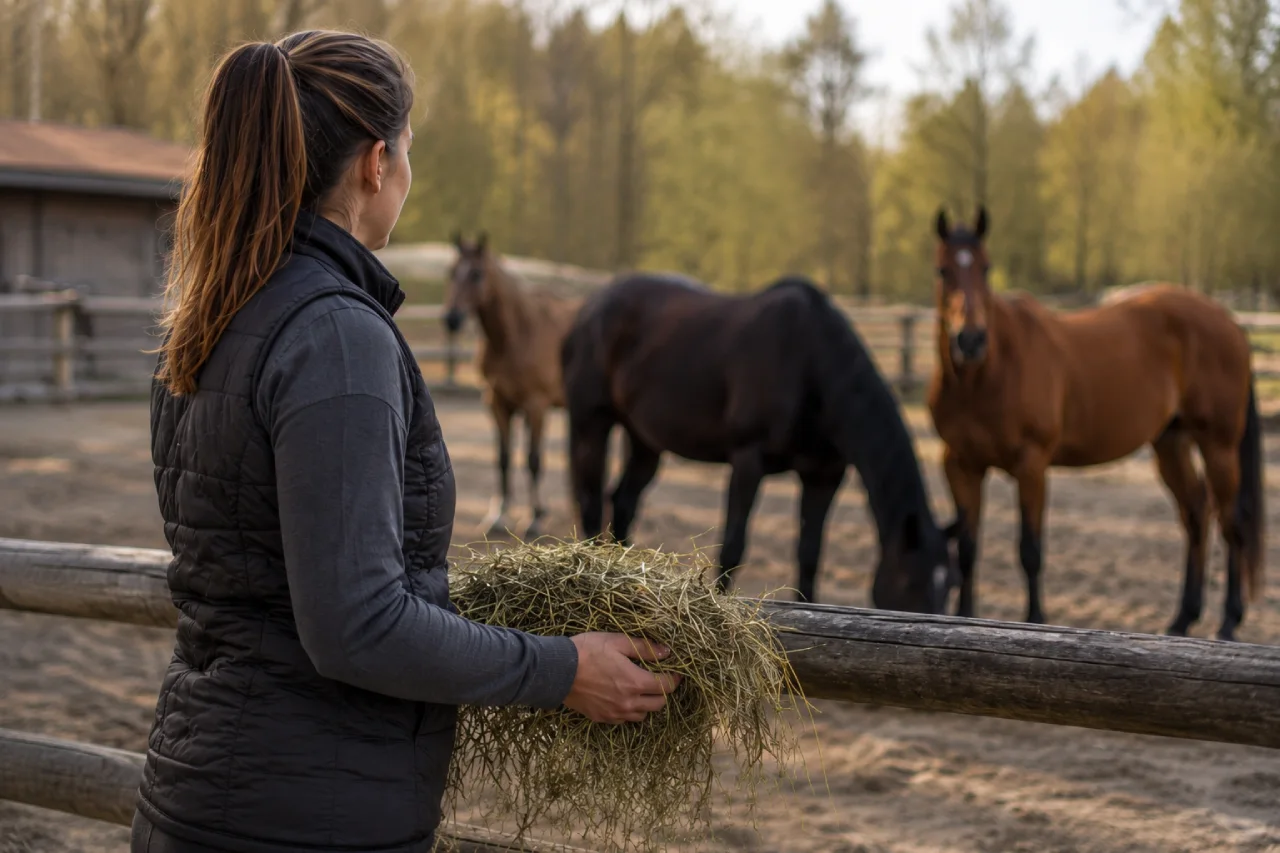
1. Why hay is not just hay
It is often underestimated how much hay can differ. Even small changes can affect digestion.
Key factors include:
- time of cutting
- plant composition
- crude fiber content
- sugar and protein content
- storage and drying
- dust or fungal contamination
The problem: a horse’s digestive system is designed for consistency. The gut flora continuously adapts precisely to the feed the horse receives regularly. If different hay is suddenly fed, this delicate balance has to readjust.
The large intestine in particular often reacts sensitively to feed changes. This is where crude fibers are fermented and large amounts of water are regulated. If this system becomes imbalanced, water may no longer be bound properly – and fecal water can occur.
2. Why problems often occur in spring and autumn
Many cases of fecal water occur exactly during periods when feeding changes significantly.
In spring
- switch to young grass
- increased metabolic activity
- weather-related stress
In autumn
- less fresh grass
- therefore more hay
- start of coat change
- often less exercise
All these factors often affect the organism at the same time. This explains why some horses react particularly sensitively in spring and autumn.
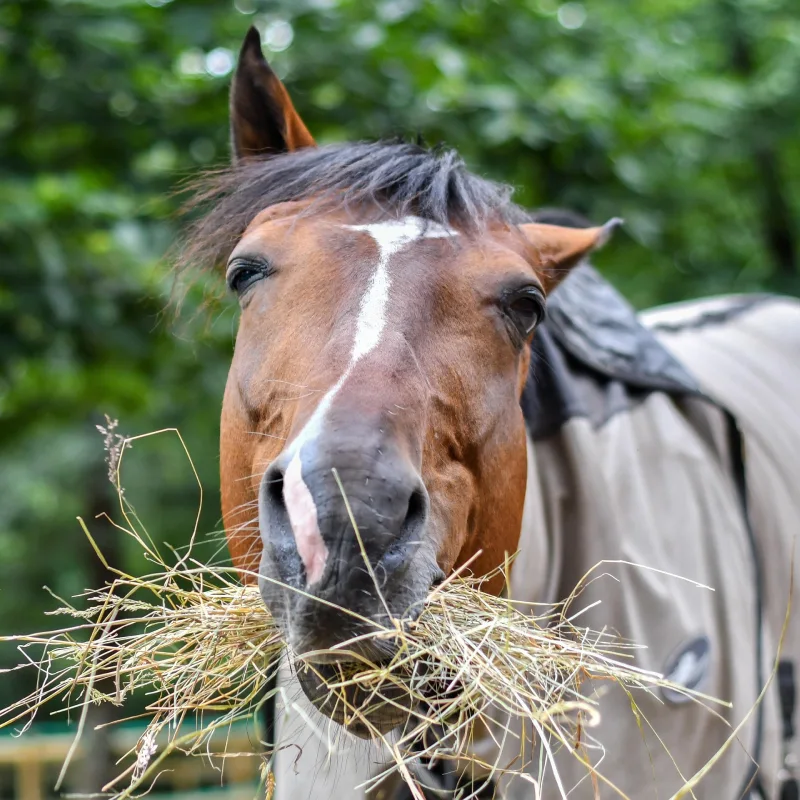
3. Why fecal water is usually not an isolated problem
When fecal water occurs, it is often tempting to look for a single cause. In practice, however, fecal water is usually the result of several factors.
These include:
- sudden feed changes
- poor hay quality
- stress, for example due to a stable change
- long feeding breaks
- excessive amounts of concentrated feed
- sensitive gut flora
Social factors in the stable can also play a role. Lower-ranking horses or sensitive horses often react more strongly to changes.
What is interesting: in many cases, the manure itself is still relatively normally formed. However, free liquid is also passed – a typical sign of fecal water.
4. What role hay quality plays
Not only the change itself, but also the quality of the hay has a major influence on digestion.
Problems can occur due to:
- dusty hay
- mold contamination
- hay that is too coarse or very woody
- faulty fermentation
- excessive sugar or protein content
Molds and so-called mycotoxins in particular are considered possible stress factors for the gut and metabolism. Poor-quality roughage can destabilize digestion in the long term.
This is often difficult in boarding stables, as horse owners can only influence hay quality there to a limited extent.
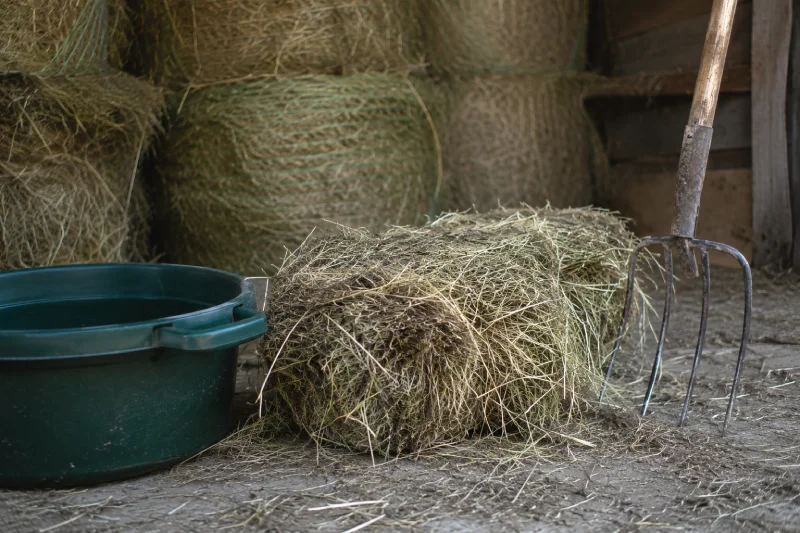
5. What to consider when changing hay
Many horses react to changes much more sensitively than one might think.
The reason is that a hay change usually occurs together with other changes. For example, changes in the weather, the start of training or the beginning of the competition season, a stable change, and the associated new herd structure.
Stress directly affects gut movement and the gut environment. That is why fecal water often occurs exactly during phases when several changes happen at the same time.
The most important tip:
Always change feed slowly. The digestive system needs time to adapt. New hay should therefore be mixed in gradually over several days.
Regular feeding times, sufficient roughage, the shortest possible feeding breaks, consistent exercise, and generally low-stress housing are also important.
Many horses also benefit when digestion is specifically supported during this phase.
6. Why supporting the gut environment can be useful
Especially in horses with sensitive digestion, it is repeatedly seen that stabilizing the gut environment can be helpful.
The aim is not simply to “stop” symptoms, but to relieve the gut during the transition.
Supplementary feeds with fiber, mineral binding components, and structure-supporting effects have proven particularly useful here. And this is exactly where VETAMIN comes in.
VETAMIN combines high-quality fibers with PMA zeolite – a particularly finely processed natural zeolite.
This physical approach is intended to:
- stabilize the gut environment,
- bind excess substances
- and support digestion during sensitive phases.
Especially during hay changes, coat changes, or stress-related digestive problems, many horse owners use VETAMIN specifically as a 3-week course.
The advantage: VETAMIN is purely natural. It does not follow an aggressive or highly burdensome approach, but supports the natural stabilization of the digestive system.
7. Practical experience
Many horse owners report that fecal water becomes more pronounced particularly during feed changes.
Show jumper Alexander Esser also uses VETAMIN specifically during feed changes to support his horses in this sensitive phase.

8. When to consult a veterinarian
However, not every digestive change is harmless. Veterinary clarification is particularly important if additional symptoms occur: severe diarrhea, signs of colic, weight loss, fever, or lethargy.
Digestive problems can also be caused by diseases of the gastrointestinal tract or other health-related issues.
Conclusion: A hay change is a sensitive phase for the gut
A hay change always means an adjustment of the horse’s entire digestive system. Sensitive horses in particular often react with fecal water or unstable digestion.
That is why the following are crucial:
- slow transition
- good hay quality
- avoidance of additional stress
- targeted support of the gut environment
Those who react early and consciously support digestion can significantly reduce many problems.
Read more:
Note:
VETAMIN is available as a supplementary feed and can be used supportively when indicated.
Related products
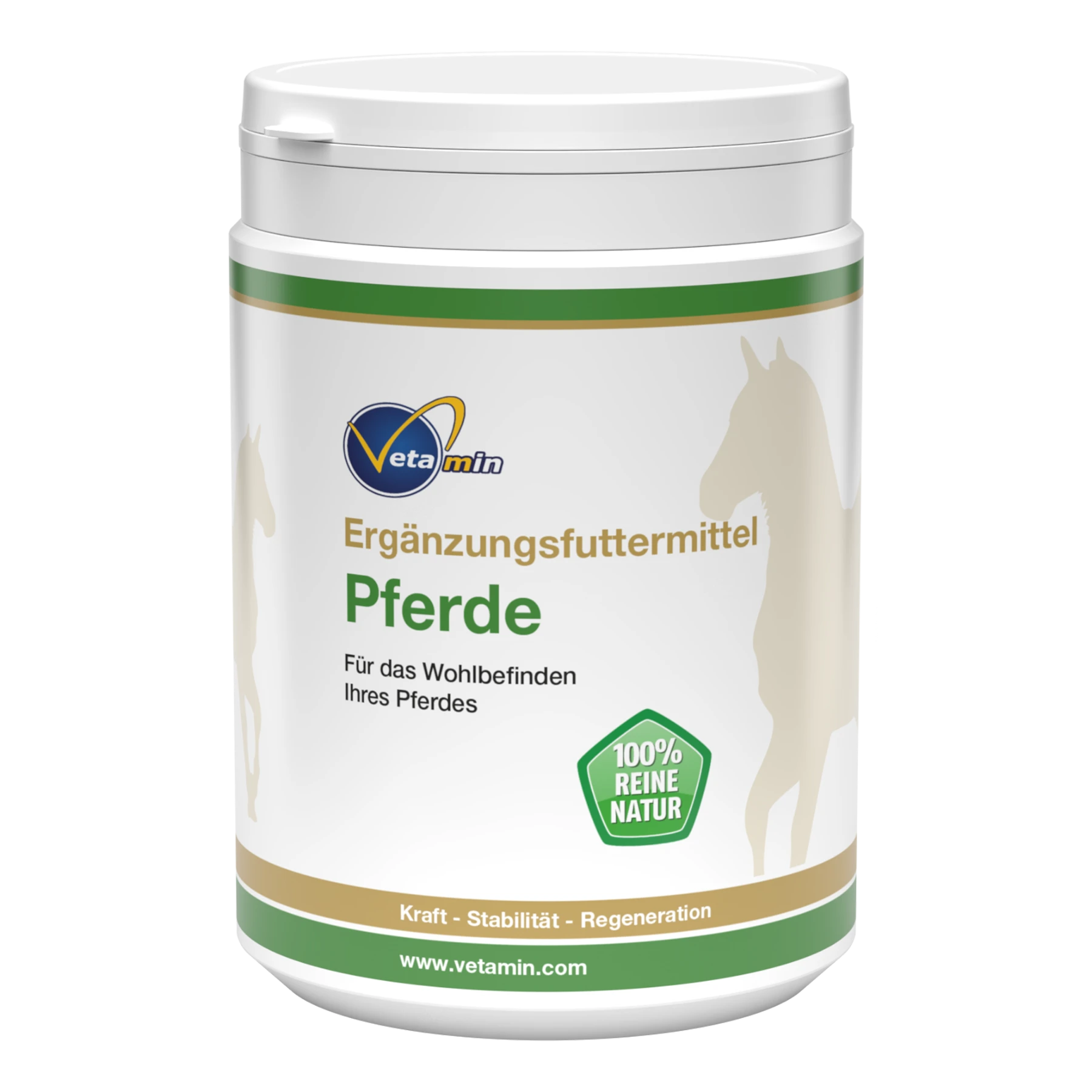
Content: 400 g (€6.25 / 100 g)
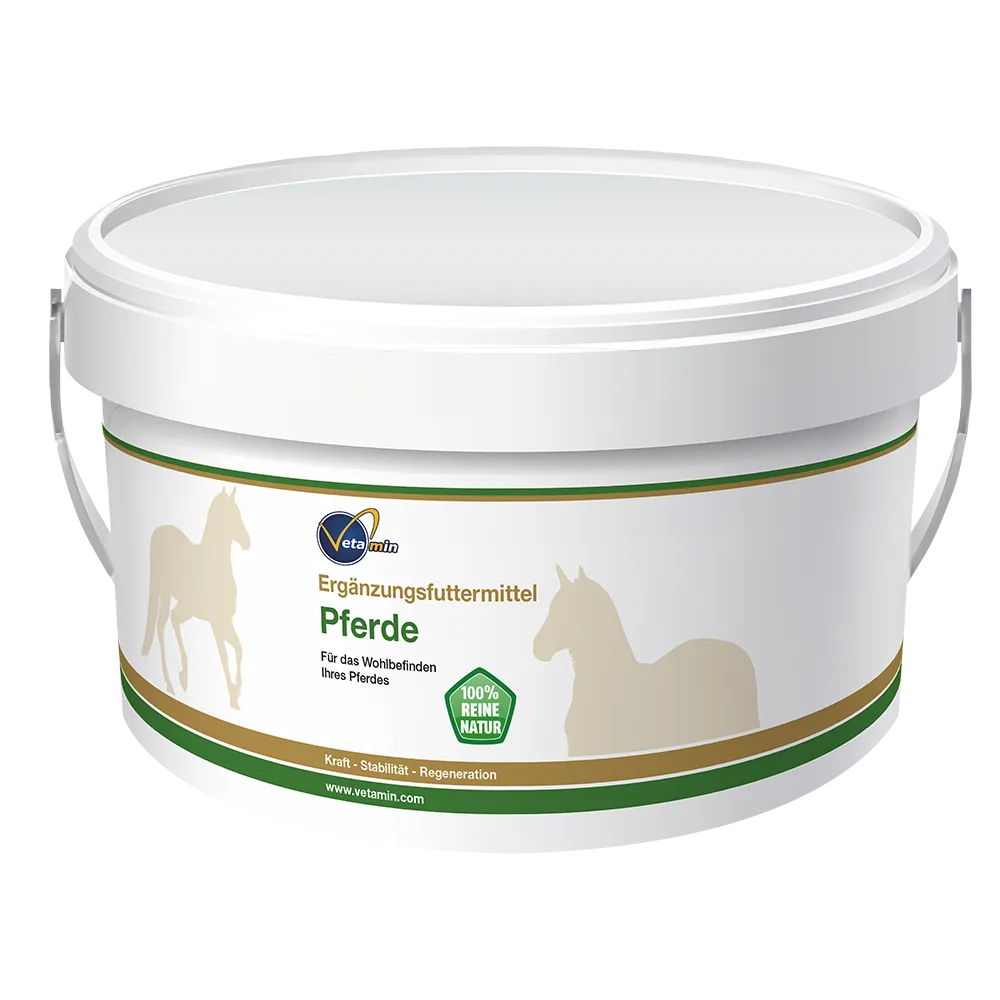
Content: 1500 g (€3.91 / 100 g)